If you're reading this while still inside, and you haven't told anyone what you're thinking, we want to say something first: you don't have to have this all figured out yet. You don't owe anyone an announcement, a timeline, or a reason. This is your decision to make at your own pace, however long that takes.
This article is about the practical side of that - protecting your safety, your documents, and your options while you're still working things out, without anyone around you needing to know before you're ready to tell them.
A quick note before we start: everyone's situation is different, and some are riskier than others. If you believe you're in a household where leaving could lead to physical danger, please treat that as the priority above everything else in this article, and consider contacting a domestic abuse helpline (National Domestic Abuse Helpline: 0808 2000 247, free, 24/7) alongside anything here - they have specific expertise in safety planning that goes beyond what we can cover.
Start with information, not action
The biggest mistake people make isn't moving too slowly - it's moving too fast, before they've quietly gathered what they need. Reading, researching, and thinking things through doesn't require telling anyone anything. Take the time.
If you're worried about your browsing being seen, use a private/incognito browser window, and consider clearing your history afterwards as a matter of habit rather than only when you're worried about something specific - that way, a sudden clearing of history right before you leave doesn't stand out. If shared devices are a real risk, a library computer or a trusted friend's device outside the household is safer than anything at home.
Documents: gather copies quietly, over time
This is one of the most practical things you can do early, and it rarely raises suspicion if done slowly.
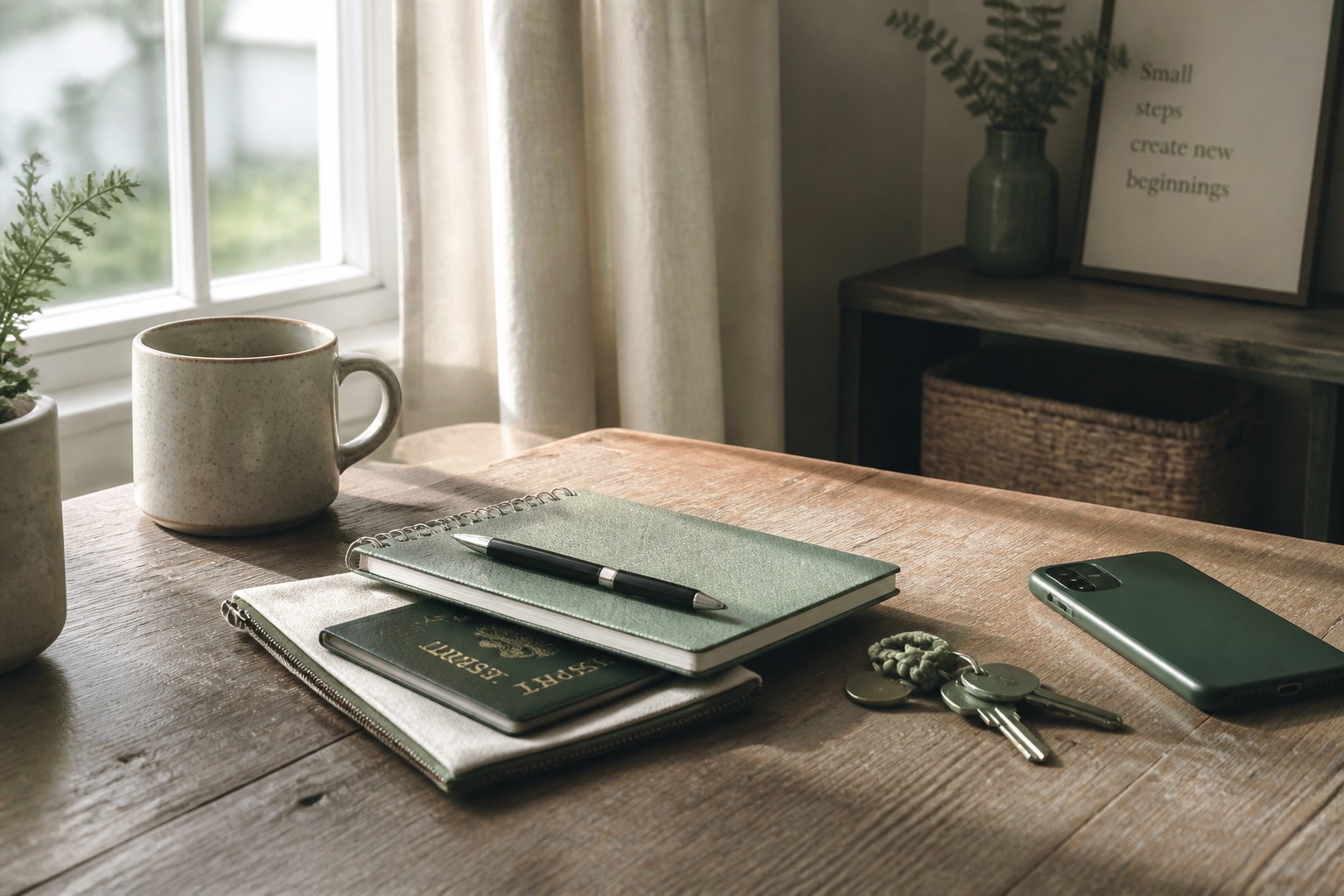
Identity documents. Passport, birth certificate, National Insurance number, any ID cards. If these are held communally or by someone else in your household, think about whether you can get copies or know exactly where the originals are kept, without needing to ask directly.
Financial documents. Bank statements, details of any accounts in your name, payslips if you're working. If you don't have your own bank account yet, our guide on opening a bank account for the first time is worth reading before you need one urgently.
Anything else that's yours. Educational certificates, medical records, anything that proves who you are and what you've done - these are often harder to replace than people expect, especially if you're not on good terms with the people who might otherwise help you get copies later.
Take photos of documents with your phone as a backup, and consider storing them somewhere outside the household - a cloud storage account with a password only you know, or with a trusted person outside your immediate community.
Money: build a small, quiet cushion
You don't need a large amount saved before you leave - most people don't, and that's genuinely okay. But even a small amount set aside somewhere only you can access makes an enormous difference in the first few days and weeks.
If you don't already have a bank account separate from shared or family finances, that's worth prioritising early - see the guide mentioned above. If a bank account itself would raise questions, some people start with a small amount of cash kept somewhere private, or ask a trusted outside contact to hold a small amount on their behalf.
Even £50 tucked away is worth more than no plan at all.
Building a support network outside
This is often the hardest part, because if you've spent years inside a high-control environment, your entire social world may be inside it too. But even one person outside - an old school friend, a distant relative, a colleague, an online community of former members - makes a real difference.
Online spaces for former members of high-control groups exist specifically because so many people are in exactly this position: still inside, quietly looking for connection to the outside world before they're ready to leave. These spaces can be a first, low-risk way to talk to people who understand, without anyone in your household needing to know.
If you're able to, having somewhere physical to go - even temporarily - matters too. A spare room, a sofa, a short-term let. You don't need the whole picture worked out, but having some idea of where you'd go on day one takes a huge amount of pressure off the moment itself.
Digital safety
A few practical habits worth building now, quietly, regardless of how soon you're planning to leave:
- Use a password manager, and make sure your important passwords aren't ones anyone in your household could guess or already knows.
- If you use shared devices, be mindful of autofill, saved passwords, and browser history - private browsing windows help, but the safest approach is using a device nobody else has access to when researching anything sensitive.
- If you're active in online spaces related to leaving, consider a separate email address that isn't linked to anything your household would recognise.
- Turn off location sharing on any apps where it's currently on, ideally without drawing attention to the change - do it alongside other routine settings changes if you're worried it'll be noticed.
When you're ready to actually go
There's no single right way to do this, and it depends enormously on your specific situation, but a few things tend to help regardless:
Pick a moment, not a perfect moment. There's rarely a perfect time. Waiting for one often just means waiting indefinitely.
Tell people only as you need to. You don't owe anyone advance notice, including family. You're allowed to leave first and explain - or not explain - afterwards, on your own terms.
Line up your first few days before you go, even loosely. Where you're sleeping, how you're getting there, and who - if anyone - knows what's actually happening.
Give yourself permission to feel conflicted. Even a carefully planned exit from a genuinely difficult situation can come with grief, fear, and doubt, sometimes all at once. That doesn't mean you've made the wrong choice. It just means it's a big thing to do.
After you've left
The planning doesn't stop the moment you're out. Sorting your own bank account, your own address, your own documents in your own name - all the practical scaffolding - takes real time, and it's completely normal for it to feel overwhelming in the first weeks. Our resource library covers a lot of this ground: employment, education, financial basics, and the emotional side of what happens after exit. You don't have to work through it all at once, and you don't have to work through it alone.
If you'd like more direct, personal support with any part of this - before or after you leave - our Support Application Portal is a confidential, judgement-free place to reach out, whenever you're ready.